
September - Early Autumn - Metal/Vata
Tulsi & Butternut Squash: Morning Meditation and Herbal Nourishment
A Year of Seasonal Self-Care with Plants and Rituals

Cooler mornings
The energy of September – transition, grounding, nourishment and a gentle return to rhythm.
As we land into September, it feels like a transition, moving from the frenetic energy of summer to more of a need to come inward, a sense of grounding and nourishment. And that is just what we need right now.
There is often a sense that September brings a subtle turning point. I often find in my practice a renewed sense from clients to come back to a focus on their health, to get started or to go deeper and also a sense of how to prepare for the winter. How to build immune resilience and how to end the year feeling healthier, stronger and more in control of their health.
The warmth of summer may still be with us, but the mornings feel cooler. The evenings begin to draw in and the light changes. And after the freedom, spontaneity and outward energy of summer, September can bring a welcome sense of coming back to a rhythm.
For many of us, September still carries that feeling of a new term.
Back to work.
Back to school routines.
Back to regular meals, earlier nights and more structure to the week.
After a busy summer of holidays, socialising, later nights and days that don't always follow a routine, this return to structure can actually feel quite settling for the nervous system. There can be something comforting about knowing what tomorrow looks like.
A regular morning.
A walk at the same time each day.
Getting the children back into their routines.
Or simply having a little more space to yourself once the summer busyness has passed.
And this year, we have experienced a particularly hot and dry summer. While sunshine can feel wonderful, prolonged heat and dryness can also leave us feeling depleted. From an Ayurvedic perspective, this is important because dry, light, mobile and changeable qualities are associated with Vata.
As the season begins to change, we can therefore start to notice more Vata-type symptoms:
Dry skin and lips.
Restlessness or feeling wired but tired.
A tendency towards overthinking.
Digestive irregularity.
Difficulty settling into sleep.
Feeling scattered or mentally busy.
Perhaps you recognise some of these after a long, hot summer. As the weather moves from hot and dry towards cooler, damper and more changeable conditions, we also experience another seasonal shift. The air becomes cooler and more humid and we can start spending more time indoors.
And this is traditionally a time when respiratory complaints and seasonal infections can become more common. Take this as a reminder to begin taking care of our lungs, respiratory system and overall resilience before winter arrives.
In Traditional Chinese Medicine, autumn is associated with the Metal element, which is connected with the lungs and large intestine. Metal is a season of breathing, boundaries, letting go and turning our attention inward. The Lung system is also closely associated with our Wei Qi — our protective energy — making autumn a natural time to think about supporting our resilience as the seasons change.
Emotionally, Metal is often associated with grief and letting go. There can be a quiet poignancy to September. The holidays are over. Summer is beginning to fade. The garden is changing. And perhaps we notice things we have been too busy to feel during the brighter, busier months. I often feel that summer is so busy, I don’t have time to think, I am more in the moment but as September lands, there is more space to allow thoughts to flow and time to recognise, where am I at now, what do I need to let go of, what can I bring in?
According to Ayurveda as the weather becomes cooler, lighter and more changeable, Vata begins to increase.
Vata is associated with movement, air and space. When balanced, it brings creativity, clarity and adaptability. But when it becomes excessive, we may feel scattered, anxious, dry, restless or unable to settle. This is why early autumn is such a beautiful time to begin introducing warmth, routine, nourishment and grounding.
And grounding doesn't have to mean anything complicated. Sometimes it can be wonderfully simple.
A warm meal.
A cup of herbal tea.
Soft socks on cool mornings.
A favourite cosy knit.
A blanket around your shoulders.
The feeling of warmth and softness against the skin.
Maybe a quite moment with a nourishing tea and space to think and observe.
These small sensory experiences can send a powerful message of safety and settling to the nervous system — particularly after the frenetic, outward energy of summer. Rather than making a dramatic change, we can simply begin to move with the season.
A little September reflection
What rhythm supports me as I shift seasons?
What feels settling after the busyness of summer?
Perhaps it is getting up at the same time each morning.
A nourishing breakfast.
A walk before the day begins.
Going to bed a little earlier.
Less scrolling.
More breathing.
Or simply creating a few quiet minutes before everyone else needs something from you.
September doesn't have to mean back to everything.
It can mean back to yourself.
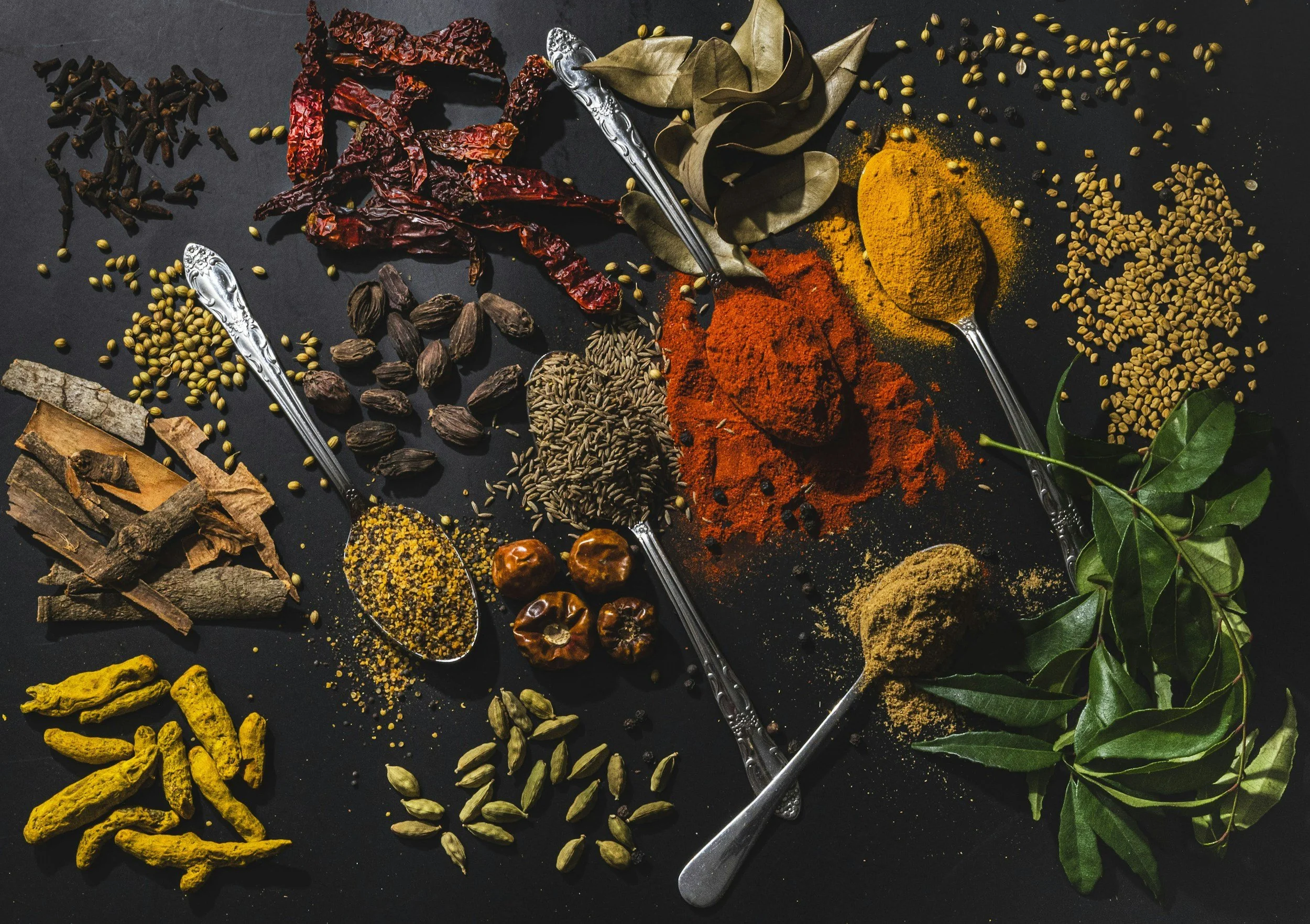
Warming spices
To help balance Vata we can bring in warming nourishing dishes and drinks and the easiest way to do this is through using spices.
It’s time to change your spice mix. This is the Autumn Ayurvedic Spice Mix from Kate O’Donnell’s book The Everyday Ayurveda Cookbook. This makes it so easy to use the spices that are perfect for each season and balancing to our Ayurvedic Doshas.
Ayurvedic Autumn Spice
1 tbsp of whole coriander seeds
1 tbsp of whole cumin seeds
2 tsp of fennel seeds
1 tbsp turmeric powder
2 tsp ginger powder
You can adjust the quantities according to your own taste.
Dry roast the coriander, fennel and cumin seeds in a heavy bottomed pan until you can smell them, just a few minutes. Cool completely. Grind to a uniform consistency in a coffee grinder dedicated to spices or by hand with a pestle and mortar. Transfer to a small bowl and add the turmeric and ginger powders until well combined. Using a teaspoon or funnel, transfer the spice mix to an air tight jar. Use freely in cooking.
There is something wonderfully grounding about having a jar of warming spices ready to reach for as the seasons change.
I also love a spiced smoothie and thought I would share this recipe with you:
Spiced Nut Milk Smoothie -
If you tend to bloat with too much fibre then you can use blanched almonds or try soaking the almonds and skinning them beforehand - but then that takes time and effort! I do like soaking the almonds overnight anyway and I do find this does help with easing bloating.
1/4 cup of almonds, soaked
3/4 cup warm water
1 medjool date ( I like to soak this for 10mins in hot water to soften even more)
1/4 tsp of cinnamon
1/4 tsp of ginger powder
1/2 tsp pure vanilla extract
Pinch of good quality sea salt
Put all the ingredients into a nutribullet or processor and blitz. Can be drunk warm or at room temperature. Ideally not cold as this will cool your digestive fire.
This month, we're looking at two simple ways to support that transition: Tulsi brings warmth, clarity and gentle support for the nervous and respiratory systems, while butternut squash brings sweet nourishment, fibre and antioxidants to the autumn table.
Together they offer a simple invitation:
Breathe. Nourish. Ground. Begin again.
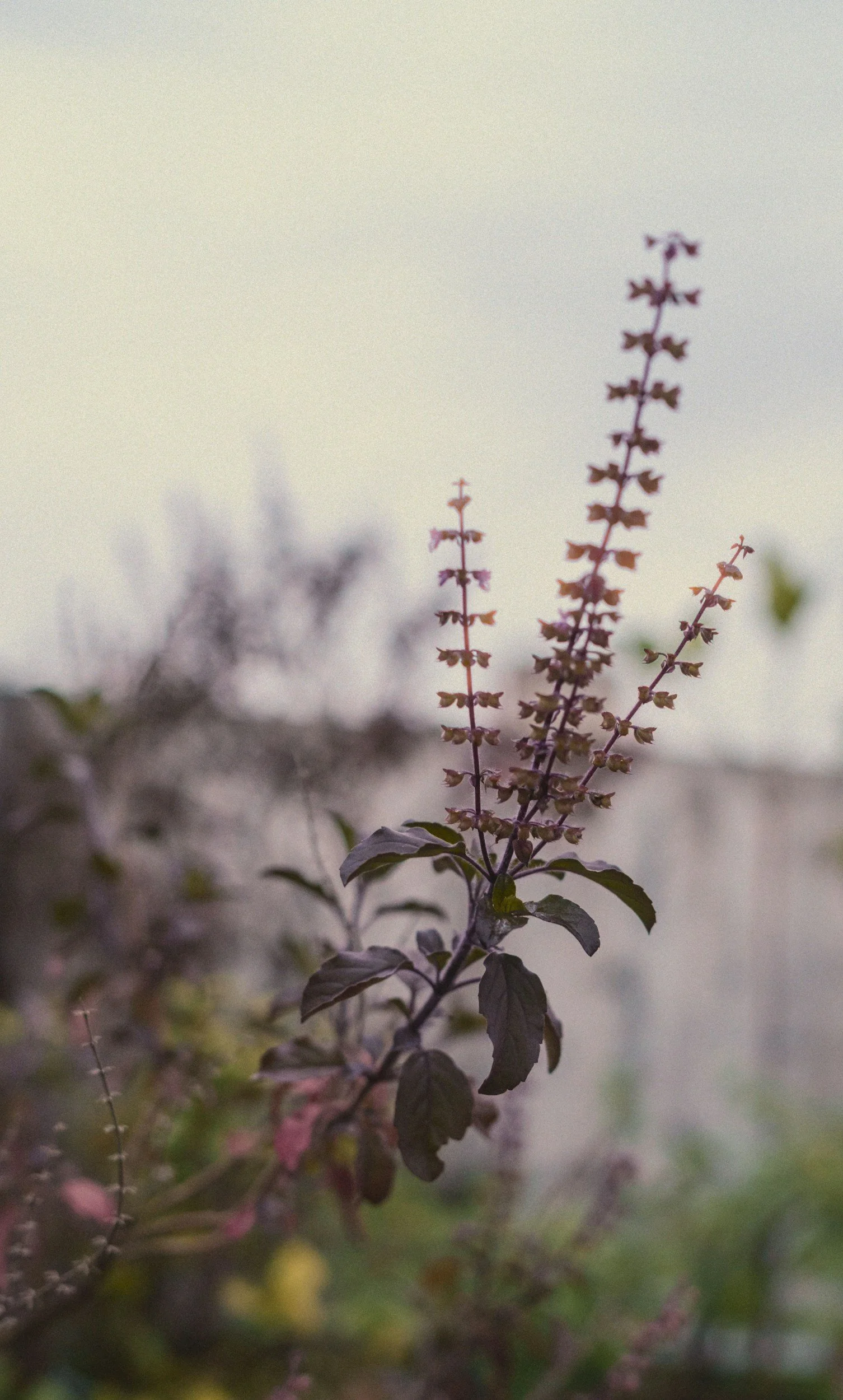
Herb of the month: Tulsi (Ocimum tenuiflorum)
Herbal Focus: Respiratory health, resilience, digestion and nervous system support
Tulsi — also known as Holy Basil — is one of my favourite herbs for times of transition.
Traditionally revered in Ayurveda, Tulsi is considered a rasayana herb — one used to support resilience, vitality and adaptation. It feels particularly appropriate for September because it sits beautifully between clearing and nourishing.
As we move from a hot, dry summer into cooler and more changeable autumn weather, our respiratory system can become more vulnerable to seasonal irritation and infection. Tulsi has a long history of traditional use for supporting the lungs and respiratory system, and laboratory research has also identified antimicrobial and antibacterial activity. While this doesn't mean Tulsi should be viewed as a treatment for infection, it is an interesting herb to bring into our seasonal self-care as we begin to think about respiratory resilience. It also has a beautiful aromatic quality that feels both warming and uplifting.
A warm cup of Tulsi tea can become a gentle marker between summer and autumn.
A moment to pause.
To breathe.
To gather yourself before the day begins.
September is about finding the balance between clearing and grounding.
Tulsi has traditionally been used to support digestion and the respiratory system, while its adaptogenic qualities have made it particularly interesting for helping the body respond to physical and emotional stress. There was also a small randomised trial that found that Tulsi improved sleep quality and reduced insomnia symptoms in menopausal women. I was first recommended Tulsi by my Ayurvedic Teacher Jo after the death of my father. Now, Tulsi has become a comforting companion when I need it most. It is often a tea I reach for to make blends for my clients, as it has so many benefits and a gentle, earthy sweetness to it that most people enjoy.
In Ayurveda, Tulsi is often associated with clearing and awakening, helping to lift heaviness and support clarity. Tulsi is traditionally used as an adaptogenic herb and research has looked at effects relating to stress, cognition and psychological wellbeing. You can see why Tulsi has become a firm favourite for myself as well as for my clients.
How could you use Tulsi this month?
Tulsi tea - Add around 1 teaspoon of dried Tulsi leaves to a mug of freshly boiled water. Cover and steep for 5–7 minutes. Strain and enjoy warm.
Morning ritual: Rather than drinking your tea while answering emails or scrolling through your phone, make it the beginning of your morning pause.
Blend: Tulsi works beautifully alongside warming spices such as cinnamon, ginger and cardamom. I also like it with rose and chamomile.
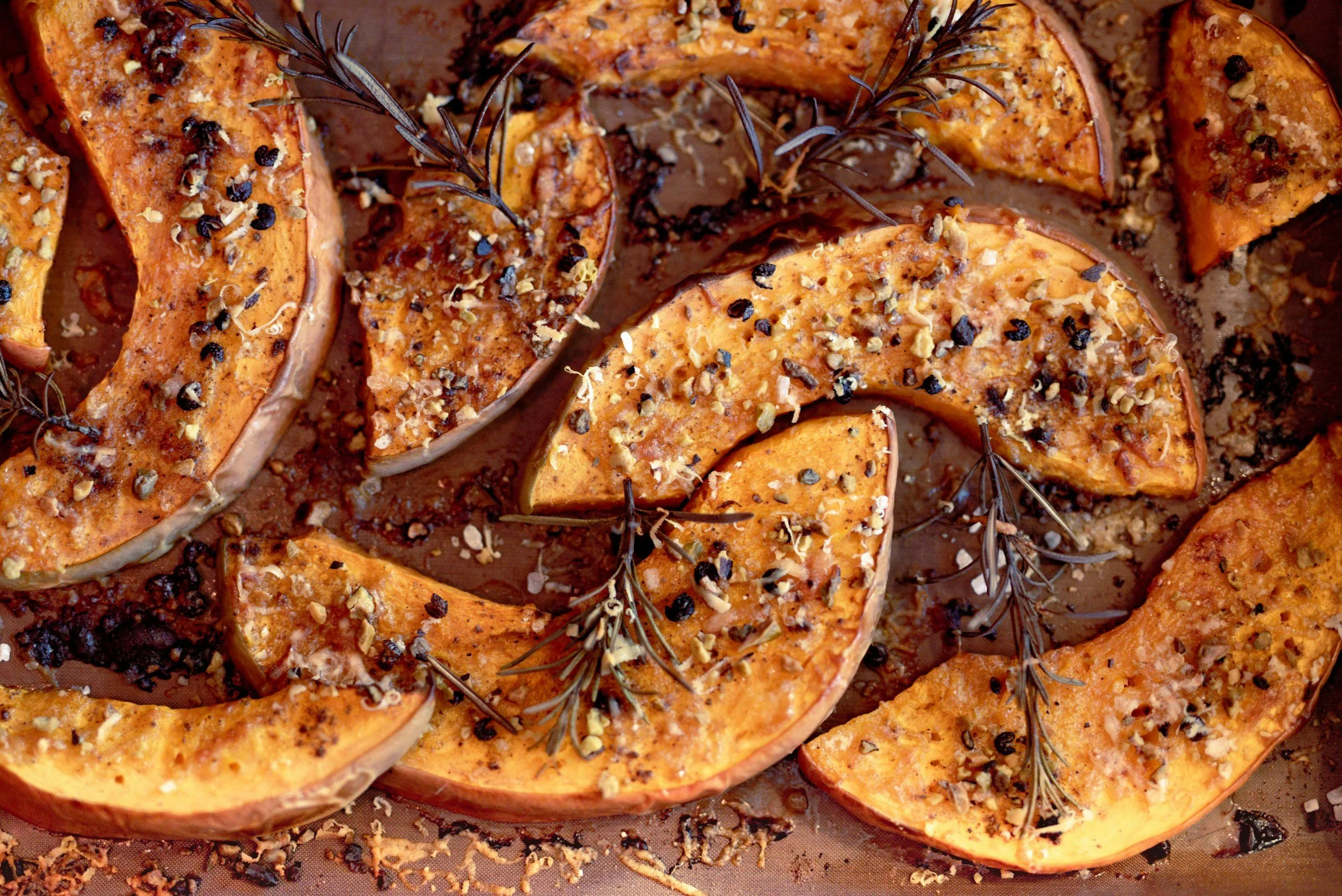
Roasted butternut squash with herbs and spices
Nourishing Ourselves With Seasonal Vegetables
September- Butternut Sqaush
Health Benefits: Sweet, grounding energy, fiber-rich, supports digestion and rich in antioxidants
There is something wonderfully comforting about the first butternut squashes of autumn.
After months of lighter summer meals, salads and fresh berries, September invites us towards food that is warmer, softer and more grounding. Butternut squash is perfect for this transition — naturally sweet, warming when cooked and incredibly versatile.
It provides fibre, carotenoids including beta-carotene, vitamin C and a range of other plant nutrients. Its natural sweetness also makes it satisfying and nourishing without needing to be complicated.
From an Ayurvedic perspective, cooking vegetables such as squash rather than eating lots of raw, cold foods can be particularly supportive as Vata begins to rise with the cooler, more changeable weather. Warm, gently spiced food can help bring us back towards a sense of steadiness.
I love butternut squash roasted simply with olive oil and autumn spices, but it is equally lovely in soups, stews, curries and dhal.
And perhaps that is part of the beauty of seasonal eating — not following a complicated set of rules, but noticing what feels naturally appealing as the seasons change.
Roasted Butternut Squash & Autumn Spice Dahl
This is exactly the kind of meal I find myself wanting at this time of year — warm, nourishing, grounding and simple.
You will need:
1 small butternut squash
1 tbsp olive oil
1–2 tsp Autumn Spice Mix
1 onion, chopped
2 garlic cloves, crushed
1 tsp fresh grated ginger
200g red lentils
1 tin chopped tomatoes
Around 500ml vegetable stock
A handful of spinach or other seasonal greens
Fresh coriander
Fresh lemon
To make:
Roast the cubed butternut squash with olive oil and the Autumn Spice Mix at 200°C for around 25–30 minutes, until soft and caramelised around the edges.
Meanwhile, gently sauté the onion, garlic and ginger. Add the red lentils, chopped tomatoes and vegetable stock and simmer for around 20 minutes, until the lentils are soft and creamy.
Stir through the greens towards the end, then fold some of the roasted squash through the dhal, leaving a little to scatter over the top.
Finish with fresh coriander and a squeeze of lemon.
Warm. Nourishing. Grounding. Simple.
This month’s Vitamin / Mineral Focus
September – Zinc & Vitamin C
Why: As we move into autumn, September is a natural time to think about nutritional foundations that support resilience and immune function. Zinc plays an important role in normal immune function and is involved in many processes throughout the body. Vitamin C also contributes to normal immune function and provides antioxidant support. They are both beneficial for skin health which can be much needed after long days in the sunshine.
How: Cavolo nero and other leafy greens. Lentils and beans. Pumpkin and squash. Nuts and Seeds, particularly pumpkin seeds. Citrus fruits. Berries and peppers.
Example: One of my favourite combinations for September would be a warming lentil dhal with roasted butternut squash, cavolo nero and pumpkin seeds, finished with fresh lemon.
No complicated supplement regime required.
Just nourishing food, prepared simply and eaten regularly.

Taking a moment to pause
September’s Ritual
Ritual: The Morning Settle
September's ritual is about creating a gentle transition into the day.
Make yourself a warm cup of Tulsi tea.
Put on your favourite cosy jumper, wrap yourself in a soft blanket or pull on a pair of warm socks.
It might sound incredibly simple — and that's the point.
After the heat, freedom and frenetic energy of summer, our nervous systems can benefit from simple sensory cues that tell the body:
You are safe. You can slow down. You are home.
Take your tea somewhere quiet.
Sit comfortably.
And for just 5–10 minutes, allow yourself to be still.
Feel the warmth of the cup in your hands.
Notice the softness of the fabric against your skin.
Feel your feet on the floor.
Notice your breathing.
Breathe in slowly.
Breathe out slowly.
Take a sip of your tea.
And allow yourself to arrive in the day before rushing into it.
You don't need to meditate perfectly.
You don't need to empty your mind.
You are simply creating a small pocket of warmth, comfort and stillness before the day begins.
A simple breathing practice
Try breathing in gently through the nose for a count of four.
Then breathe out for a count of six.
Repeat for a few minutes.
There is no need to force the breath.
Simply allow the exhalation to become a little longer than the inhalation.
This can become a beautiful daily reminder that you don't have to meet the whole day at once.
Sometimes self-care is not another thing to add to the list.
Sometimes it is simply creating the conditions in which your body can settle.
Reflection Prompt
What can I let go of as I move into this new season?
September reminds us that transition doesn't have to be dramatic. Nature doesn't suddenly become autumn overnight. The mornings become cooler. The leaves begin to change. The air becomes damper. The light softens.
And perhaps we can allow ourselves to soften too. After a long, hot and busy summer, perhaps your body is ready for something different.
More warmth.
More nourishment.
More routine
More rest.
More time to breathe.
Maybe that means a warm bowl of dhal rather than another quick summer meal.
A cup of Tulsi tea instead of another coffee.
A cosy knit and warm socks on a cooler morning.
Getting back to a regular bedtime.
Or simply allowing yourself to stop for a few minutes without feeling that you should be doing something else.
And as we move towards autumn, we can also begin to think about protecting what is precious — our energy, our respiratory health, our nervous systems and our capacity to cope with the months ahead.
This September, perhaps we can remember:
Warm the body.
Nourish deeply.
Breathe well.
Create gentle routines.
Make space for stillness.
Let go of what you no longer need.
Perhaps September isn't about starting again.
Perhaps it is about returning to what supports us.
And finding comfort in the simple rituals that help us feel grounded, settled and ready for the season ahead.
A Gentle Note on Safety & Individuality
While herbs are natural, they are also biologically active. What supports one person may be inappropriate for another, depending on their constitution, medications, life stage, or current health.
September – Tulsi
This herb may not be suitable if…
You experience restlessness or overstimulation with adaptogenic herbs.
You have very dry, depleted or strongly Vata-type symptoms without grounding support.
You are pregnant or breastfeeding without individual professional guidance.
You take medication or are managing a medical condition and are considering using Tulsi regularly or therapeutically.
Tulsi is generally well tolerated as a traditional herbal tea, but individual responses vary.
As always, listen to your body and seek individual guidance if you are unsure.
Important note:
The information shared in this series is for educational purposes only and is not intended to replace personalised medical or herbal advice. Herbs are biologically active substances and may not be suitable for everyone. If you are pregnant, breastfeeding, taking medication, or managing a medical condition, please seek individual guidance from a qualified practitioner before using herbal remedies regularly.