
January – Winter / Water Warming Rituals for Cold Days
A Year of Seasonal Self-Care with Plants and Rituals
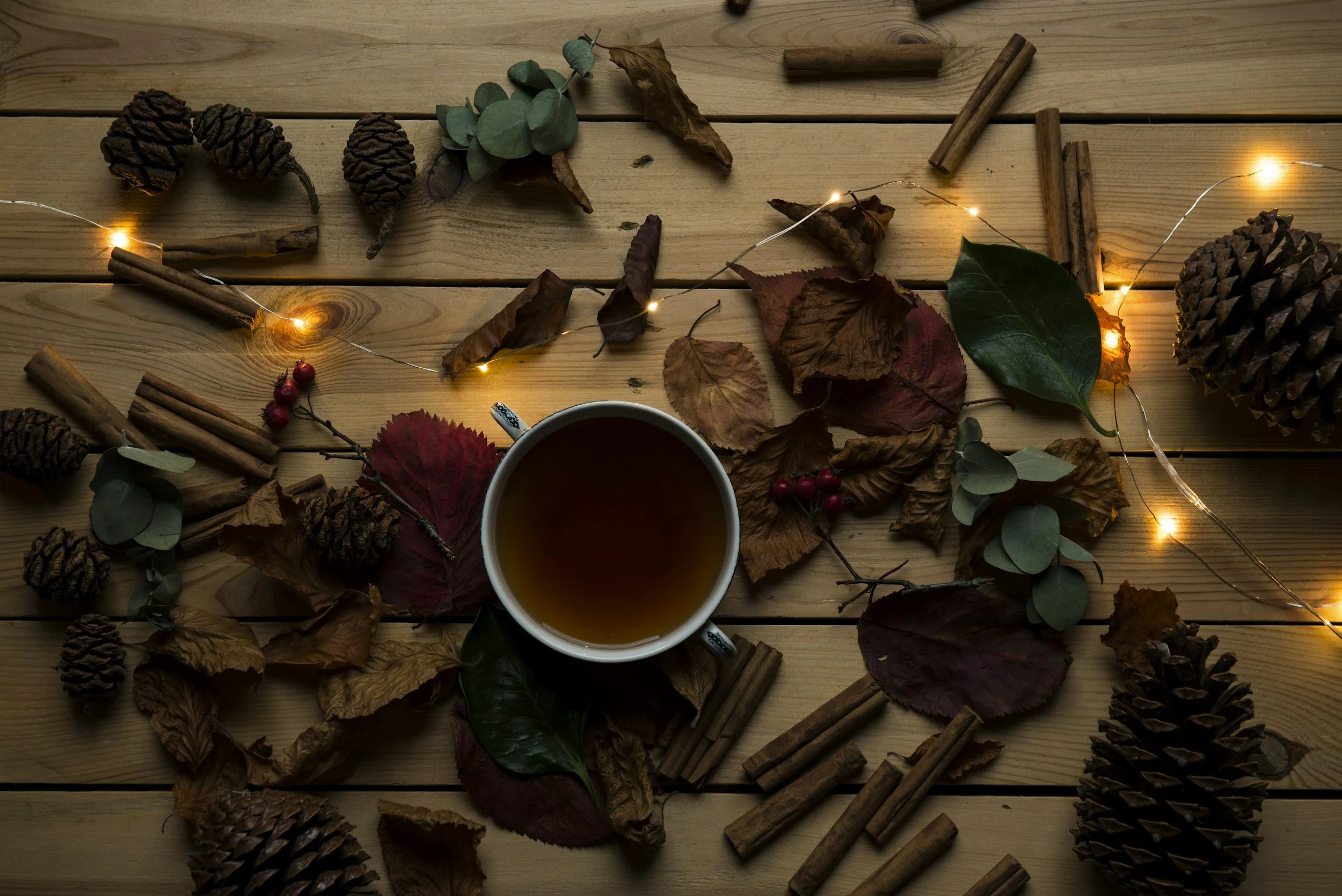
This year, 2026, I am committing to writing a blog each month on self-care guidance using plants and rituals that align with each season and are simple and easy to implement. When we want to create new habits we have to practice at it. Habits don’t become a part of of our lifestyle immediately, so we need to make it easy, we need to resonate with how good it makes us feel so we understand it’s worth and we have to keep doing it.
Modern life does seem to encourage us to view the body as if it is separate from nature— eating the same foods, keeping the same pace, and expecting the same energy levels all year round. But traditional systems of medicine understood something very different:
The body is not separate from the seasons, it flows with them.
My seasonal self-care guidance is not about rigid rules or detox programmes. It’s about recognising the natural rhythms as it changes throughout the year, understanding what the body needs at that time and supporting the body before imbalance turns into symptoms. But also recognising we are all busy and don’t have much time and this is why I am focussing on simple ways for healthy living.
This blog series draws on three complementary traditions — Western herbalism, Traditional Chinese Medicine (TCM), and Ayurveda — all of which view health as a relationship between the environment, the nervous system, digestion, detoxification and the flow of energy.
Both TCM and Ayurveda describe health through the elements
Water, Earth, Fire and Air in Ayurveda
Water, Earth, Fire, Metal and Wood in TCM
In Traditional Chinese Medicine, the year moves through the Five Elements: I have written about each element before and you can find these in my blog catalogue. In January we are in the Element of Water: which influences the kidneys, nervous system, and holds our deep reserves of energy or Qi. And in Ayurveda, the seasonal changes are understood through the doshas. Which are made up of the Elements and these are: Vata, Pitta and Kapha. During Autumn and Winter, we are in the season of Vata: which reflects in the Element of Air and also Space — we can see this of characteristics of dry, cold, light, mobile, subtle, rough, irregular . You can balance vata’s cold, airy tendencies by increasing its opposite qualities: more warmth, moisture, and earthiness as well as stillness and grounding practices and reducing what would increase lightness, cold, or dryness.
Vata energy can be disturbed by travelling, rushing and being too busy, so calming and grounding restorative practices help us to feel more in balance. Spending more time in nature is helpful and increasing warming and grounding foods and drinks are beneficial.
When we live in harmony with the dominant element of the season, the body tends to self-regulate more easily and if we implement seasonal selfcare with a focus on what is dominant in the environment right now, and understand how to gently balance it, then we can build better health and vitality. And feel more in tune with our state at this moment of time. This is a restorative practice.

January – Winter / Water
Warming Rituals for Cold Days
We are still in mid-winter here in the UK, whereas in nature, the rhythm is slow with more time for rest. In winter, nature draws in nutrients from the soil, refuels the reserves but conserves energy. Look to nature and mirror the focus of rooting down, coming inward, conserving and building energy. It is important now to restore your own fuel tank and repair a frazzled nervous system. During the cool, crisp and wet days of January we are craving warmth and cosiness. When we align with nature and the seasons we can more easily find balance as the body feels supported.
Herbal Medicine - Herb of the month: Ginger
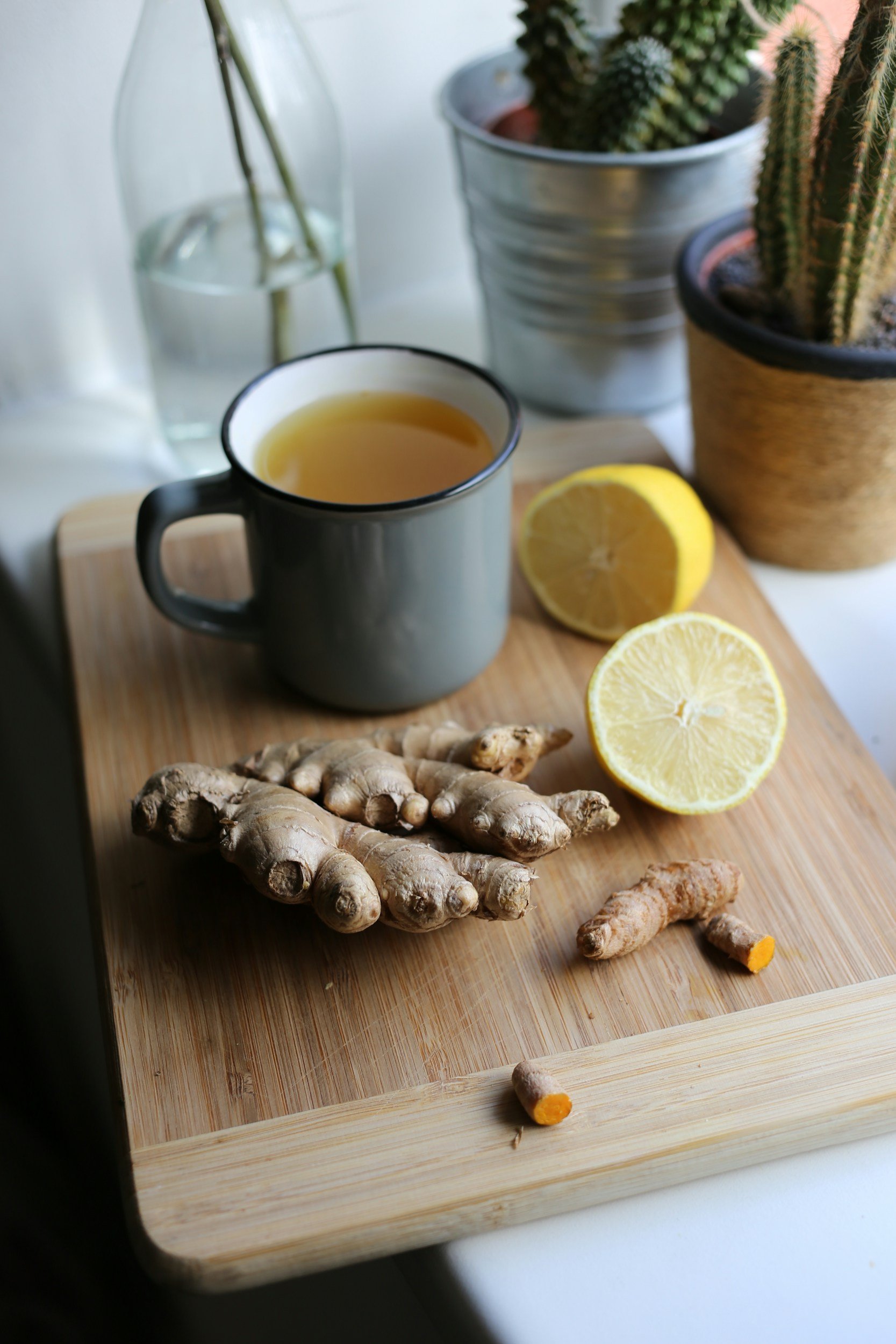
Ginger is warming and energising. It supports our circulation, digestive system, is naturally anti-inflammatory, and can support our immunity during the cold winter months. It can help to stimulate our appetites and encourages the secretion of digestive enzymes; improving digestion. It helps dispel sluggishness and promotes warmth in the body. From a TCM perspective, ginger warms the spleen and stomach, helping to dispel cold and restore Qi (energy), after the winter months. In Ayurveda, ginger kindles Agni (our digestive fire) and pacifies Vata and Kapha, supporting digestion and energy when the body is naturally slower and more inward.
After the festive indulgence, we may well be feeling heavy and sluggish, so this is the perfect way to bring warmth and movement to our digestive system and restore energy.
Additional benefits: Ginger can also help to bring down a fever and also is helpful in clearing catarrh and easing nausea and abdominal pain. Ginger can help to lower blood pressure and cholesterol so can be a helpful health tool.
How could you use ginger this month?
Tea / Infusion: Grate 1 tsp fresh ginger into hot water, steep 5–10 min to enjoy as your morning tea. This is an energising tonic but also great for stimulating the digestive system first thing in the morning.
Food: Add fresh ginger to soups, stews, roasted winter vegetables, or smoothies.
Swap It: If fresh ginger isn’t available, try dried ginger root or a pinch of cinnamon for a warming alternative.
Go Further: add some turmeric (fresh or dried) with a squeeze of lemon for additional health benefits.
Need Some Recipe nspiration: Try this warming carrot and ginger soup by Riverford
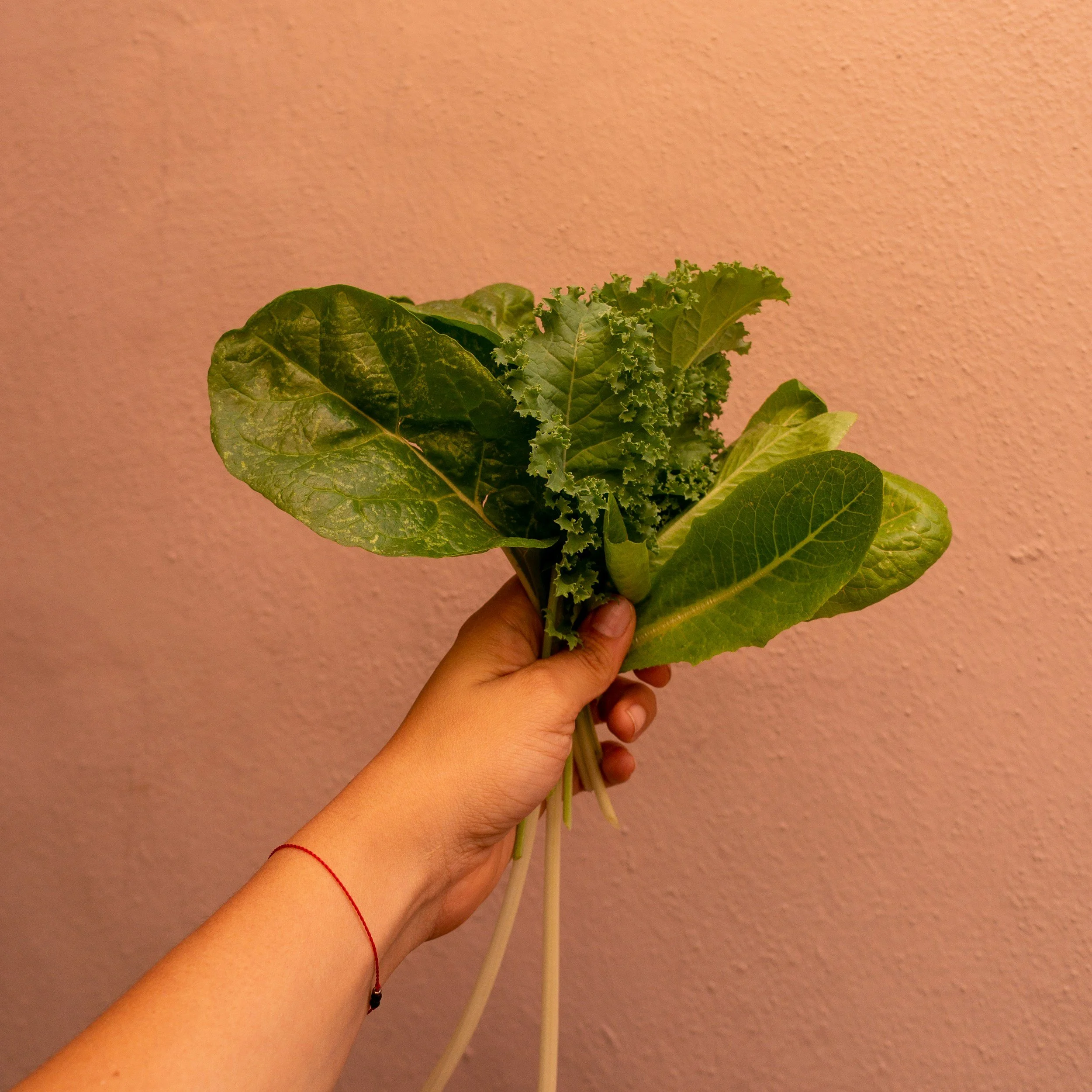
Nourishing Ourselves With Seasonal Vegetables – Winter Greens (e.g. Kale, Swiss Chard, Spinach etc)
Winter greens are rich in iron, vitamin C, and antioxidants — These foods nourish our liver and are perfect for blood health, immunity, and gentle detoxification.
Simple Recipe:
Sautéed Winter Greens: Heat 1 tsp olive oil, sauté 200g chopped greens with 1-3 cloves garlic for 3–5 min. Season with sea salt and pepper.
Optional: finish with a squeeze of lemon for vitamin C and flavour
Swap It: If winter greens aren’t available, try cabbage or cavolo nero.
Need More Recipe Inspiration: Add in some of your favourite winter greens to this cauliflower laksa with ginger by Riverford -
This month’s Vitamin / Mineral Focus
In Winter our circulation gently slows and we are in need of blood-nourishing nutrients especially if you are feeling sluggish or low in energy.
Focus: Iron + Vitamin C — which helps to support our circulation, nourishes our blood health, and can help to provide much needed energy in winter. Adding lemon or orange juice (vitamin C) to your winter greens which are rich in iron will help to boost iron absorption.
January’s Ritual
Nurturing our mind, body and nervous system
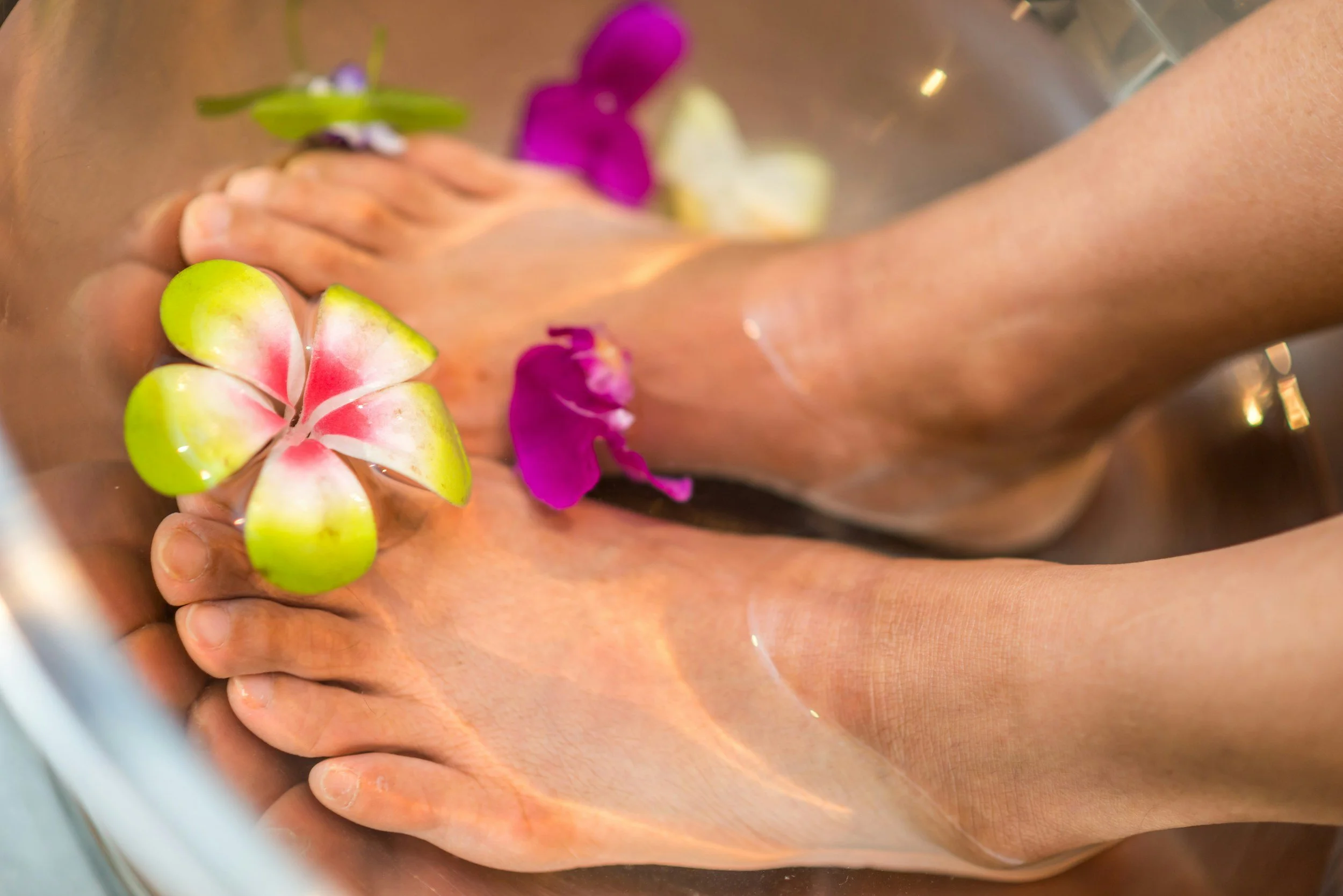
Warming Ginger Bath:
Add a 4 or 5 slices of fresh ginger or 1 tsp of dried ginger to a large mug and steep in hot water for 5 minutes then add to a foot bath, adding warm/cool water to get the right temperature for you.
Soak your feet for 10–20 min, focusing on deep, gentle breaths.
Go Further: Add a handful of epsom salts - flowers optioanl.
Reflection Prompt
“Where in my body do I feel cold or sluggish? How can I invite warmth and movement in my day?” Who are the people around me that drain my energy and who builds it?
A Gentle Note on Safety & Individuality
While herbs are natural, they are also biologically active. What supports one person may be inappropriate for another, depending on their constitution, medications, life stage, or current health issues.
Ginger (Zingiber officinale)
This herb may not be suitable if…
You run very hot, with symptoms such as night sweats, hot flushes or inflammatory skin conditions
You experience acid reflux that worsens with spicy or warming foods or have gastric or peptic ulcers.
You are using high-dose blood-thinning medication, unless supervised
In these cases, ginger may still be appropriate in culinary amounts, or paired with cooling herbs — but may not be ideal as a daily strong tea.
As always, dose and timing matter. Herbs that are supportive in small amounts or seasonally may feel depleting if used daily or long-term without guidance.
If you feel unsure whether this herb is right for you, then it is advisable to seek personalised guidance.
Important note:
The information shared in this series is for educational purposes only and is not intended to replace personalised medical or herbal advice. Herbs are biologically active substances and may not be suitable for everyone. If you are pregnant, breastfeeding, taking medication, or managing a medical condition, please seek individual guidance from a qualified practitioner before using herbal remedies regularly.